

- Discussion:
- profiles the the patellofemoral joint;
- points of consideration:
- patellar tilt:
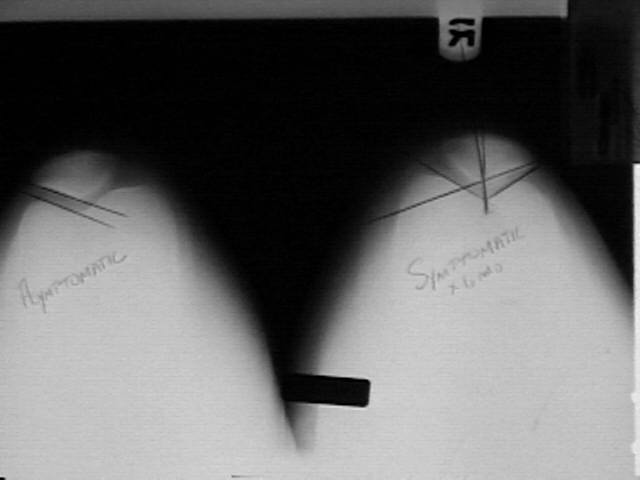
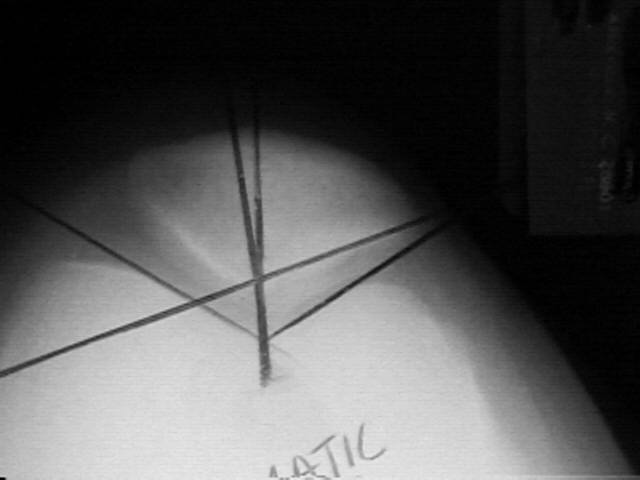
- patellar subluxation:

- sulcus angle:
- for assessment of femoral dysplasia;
- sulcus angle averages 137 to 141 deg;
- in patients w/ subluxation, the mean sulcus angle is 147 deg, with a range of 137 to 172;
- references:
- Shape of the intercondylar groove normally and in recurrent dislocation of the patella: A clinical and x-ray anatomical investigation.
- Technique Pearls:
- for x-ray to be meaningful, both knees should be included at the same time for comparison;
- knees should be flexed in range of 20 to 45 deg, since more flexion will generally reduce most patellofemoral abnormalities;
- Merchant technique
- used to evaluate subluxation;
- Laurin technique:
- lateral patellofemoral angle is index of tilt but not of subluxation;
- patellar alignment assessed using lateral patellofemoral angle on axial views, made w/ knee in 20 deg of flexion;
- angle formed by lateral patellar facet & line drawn across most prominent aspects of anterior portion of femoral trochlea should be open laterally in normal patellofemoral joint;
- Stress Axilla View:
- in some cases, there will be impressive differences between static and dynamic axilla knee views;
- made with the knee flexed 35 deg off the end of the x-ray table;
- a constant lateral pressure is exerted on to the patella in an attempt to displace the patella laterally;
- comparisons should be made between the symptomatic and asymptomatic knees;
- Sunrise View:
- used to image a tangential view of the patella;
- the patient is prone with the knee flexed 115 deg;
- central beam is directed toward the patella with 15 deg cephalic tilt
Radiological measurements in patellofemoral disorders. A review.