

- IM Nailing Technique
- Radiographs:
- look for evidence of a pathologic lesion on x-ray, noting that it would be disasterous if a nail were driven through an occult osteosarcoma or chondroscaroma;
- AP pelvis: (rule out concomitant injuries)
- Hip Dislocation
- Femoral Neck Frx
- Lateral of Knee:
- look for knee effusion (as evidenced by anterior displacement of supra-patellar pouch fat pad) which may indicate knee ligament injury;
- Leg Lengths:
- w/ comminuted frx it is of paramount importance to achieve equalization of leg lengths;
- obtain long leg cassette of uninjured leg w/ a radiolucent ruler included on film;
- long leg cassettes w/o a ruler are notoriously inaccurate;
- Canal Width:
- in adolescents and young adults carefully assess the width of the canal at the isthmus on both the AP and Lateral views;
- a tight canal leads can lead to special problems during the case such as difficulty in reaming, difficulty in reducing the fracture (and even passing the guide wire across the frx)
- it is important ahead of time to have the proper selection of nails available, small hand held reamers, and one or more surgical assistants to help with the reduction;
- since frx reduction will be difficult, skeletal traction is a must, since it allows the knee to be flexed (which relaxes the hamstrings and gastrocnemius) which facilitates reduction;
- one method that can be helpful is to first ream the proximal fragment to the desired canal width;
- subsequently, it will be easier to pass the guide wire across the fracture site;
- Classification:
- it is necessary to consider frx location and comminution;
- Comminuted Frx;
- comminution extending proximally or distally to the frx site needs to be carefully assessed prior to IM nailing;
- preoperative measurements of uninjured femur are needed inorder to obtain equal leg lengths postoperatively;
- w/ longitudinal fissures extending away from the frx site, consider open cerclage wiring prior to IM nailing;
- Proximal Frx:
- Distal Frx:
- w/ distal fractures, its essential to obtain perfect nail length since and nail that is too short may have interlocks at the level of the frx, and a nail that is too long will end up lying proud above the greater trochanter; 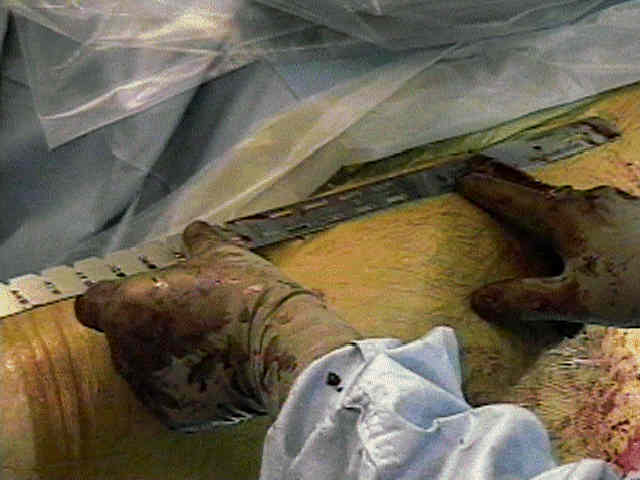
- Traction
- Frx Reduction
- proximal frx
- Distal Frx
- Implant Selection (Synthes)