

- See:
- Ankle Frx
- Syndesmotic Injury
- Weber C Frx
- Discussion:
- a proximal fracture of fibula resulting from external rotation;
- there are variations in pattern of fibula fracture reflecting either supination or pronation
- foot may even move from relative pronation to supination during injury;
- injury may occur w/ medial malleolus avulsion frx or deltoid ligament rupture, rupture of anterior talofibular ligament or avulsion of its
insertion, as well as rupture of interosseous lig, rupture of posterior tibiofibular ligament, or posterior malleolar frx;
- diff dx: proximal tibio-fibular dislocation;
- Dupuytren's Frx: 
- high fibular frx which occurs from a similar mechanism as the Maisonneuve fracture and also involves disruption of syndesmosis;
- Mech:
- injury resulting from external rotation force to ankle w/ transmission of the force thru the interosseous membrane,
which extis thru a proximal fibular fracture;
- Radiographs: 


- Non Operative Treatment:
- exam under anesthesia is advised to evaluate degree of instability;
- if stable, then long leg cast w/ frequent f/u w/ care that reduction is not lost after swelling has subsided;
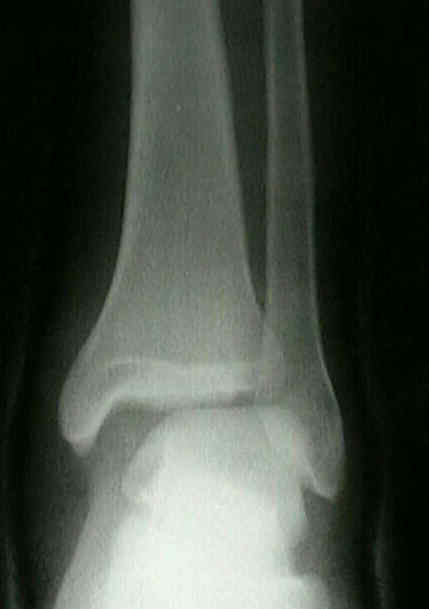
- in the following example, the frx was thought to be stable until the frx lost reduction w/ stress testing
*** 

- Surgical Treatment:
- proximal fibular frx requires no fixation;
- need to reaaproximate syndesmosis (see technique)
- unlike PER type fractures which can be fixed with a single syndesmotic screw, Massonneuve frx
may require 2 screws for two points of fixation;
- Post Op:
- short leg non wt bearing cast for 6 weeks
The Maisonneuve fracture of the fibula.
Maisonneuve fracture of the fibula.
Fractures of the fibula proximal to the distal tibiofibular syndesmosis.