

- classifaction and fracture stability
- frx stability is based on presence or absence of posteromedial butress;
- farther down shaft of femur primary frx is located, greater incidence of delayed union and implant failure;
- forces acting on hip joint
- most compression stresses are located 1-3 inches distal to lesser troch;
- Stable Frx:
- those frx in which it is possible to reestablish bone to bone contact of the medial and post femoral cortex;
- when not possible: internal fixation device will act as tension band on lateral femoral cortex, & impaction & wt bearing can occur directly thru the medial cortex;
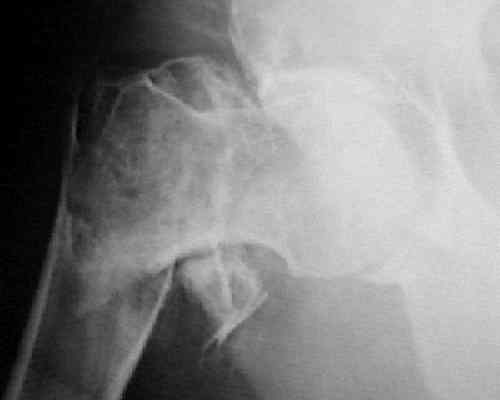
- Unstable Frx:
- w/ unstable frx, comminution results in loss of medial cortical continuity, and presents a high rate of healing complications and implant failure;
- medial cortical opposition is not obtained 2nd to comminution &/or fracture obliquity;
- in this situation, medial cortical support is inadequate;
- lateral plates or IM devices are subject to bending stress, and loads concentrate in one area of the implant;
- this results in implant failure or loss of fixation;
- in frxs distal to lesser troch, stability can be restored by osteotomy or medial displacement, as
- above all avoid treating unstable fractures like stable ones; (i.e., avoid the following);
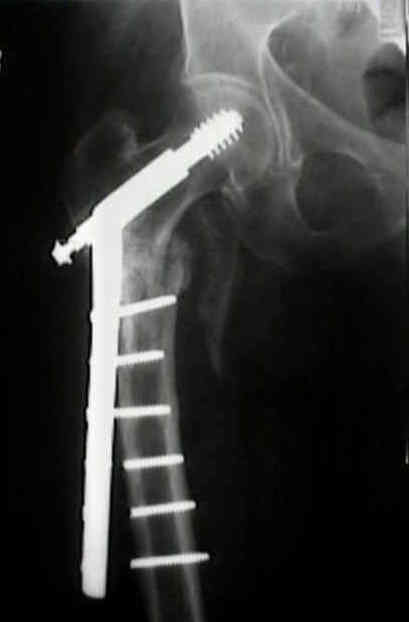
- Seinsheimer's IIIA and IV:
- account for almost all of implant failures and non unions;
- in both types there is frequent medial cortical comminution that results in lack of stability after internal fixation;
- farther down femoral shaft frx is located, greater incidence of delayed union and implant failure