

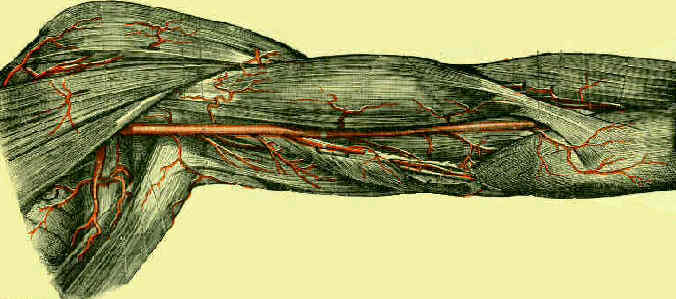
 - Anatomy:
- clavicular portion:
- originates off of the medial third of the clavicle and inserts at the lateral lip of the bicipital groove;
- sternal portion:
- originates off of the superior 2/3 of the sternum and the manubrium, as well as the superior ribs;
- inserts into the lateral lip of the bicipital groove;
- sternal costal portion:
- originates off the distal edge of the sternum and 5th and 6th ribs;
- Rupture of Pectoralis:
- ruptures usually occur near insertion into greater tubercle;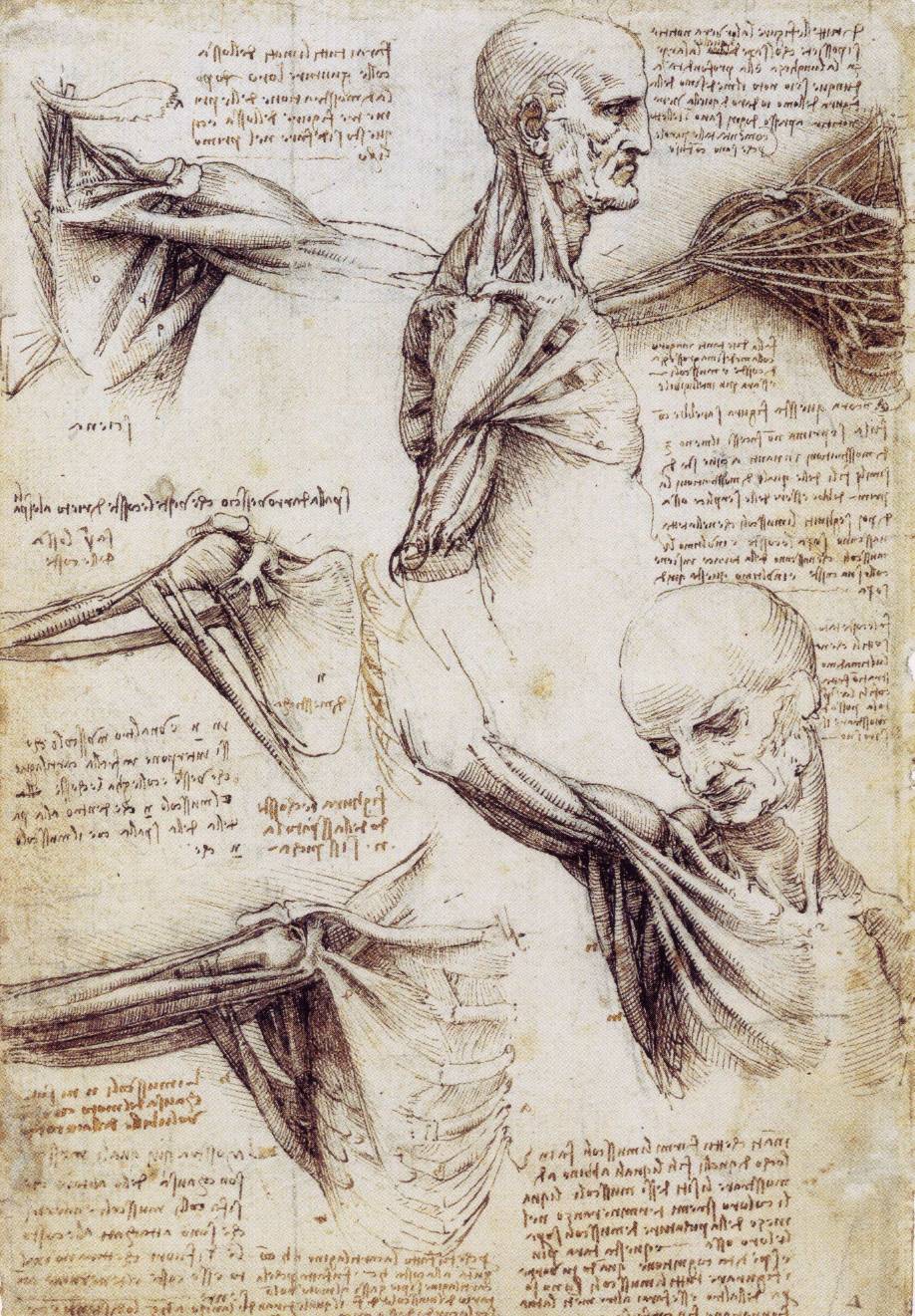
- clinical findings:
- following rupture of the pectoralis major muscle, pain, deformity, & weakness are nearly always present, & weakness;
- deformity is minimal when arm is relaxed at the side, but becomes obvious when the muscle contracts;
- early surgical repair is effective and can usually eliminate symptoms in weightlifters;
- treatment:
- subjective ratings were 96% in the acute group, 93% in the chronic group, and only 51% in the nonoperative group;
- isokinetic testing showed that patients operated on for acute injuries had the highest adduction strength (102% of the opposite side) compared with patients
with chronic injuries (94%) or nonoperative treatment (71%)
- ref: Rupture of the Pectoralis Major Muscle. Outcome After Repair of Acute and Chronic Injuries
Return to Function, Complication, and Reoperation Rates Following Primary Pectoralis Major Tendon Repair in Military Service Members
Rupture of the pectoralis major muscle.
Tears of the pectoralis major muscle.
Surgical repair of pectoralis major rupture in an athlete.
The Extended Pectoralis Major Myocutaneous Flap: Uses and Indications.
Ruptures of the pectoralis major muscle: An anatomic and clinical analysis.
Rupture of the Pectoralis Major Muscle.
Insertional Footprint Anatomy of the Pectoralis Major Tendon