Developmental Dysplasia of the Hip
Tracking Pixel
presents
Wheeless' Textbook of Orthopaedics

DDH: Non-Anatomic Positioning of the Acetabulum in THR


- See:
      Natural History of DDH:
      Total Hip Replacement Menu:
            - acetabular component menu:

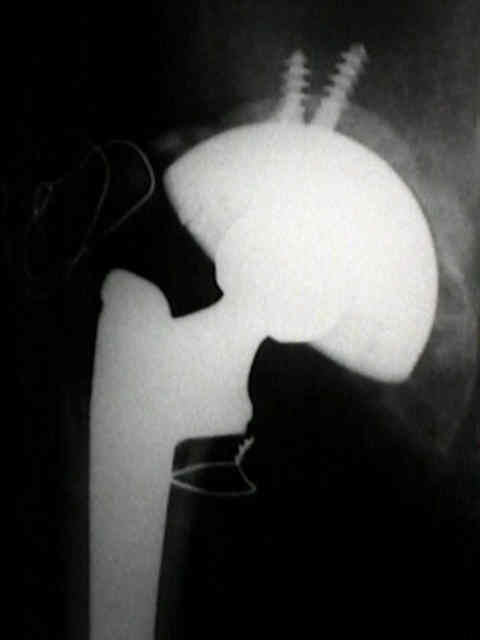
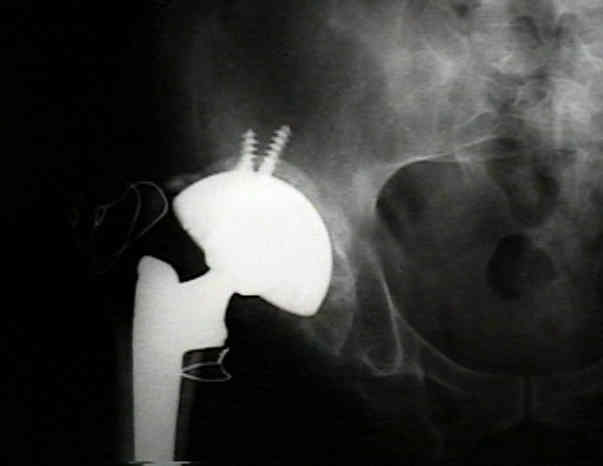
- Non Anatomic Positioning of the Acetabulum in DDH: (high hip center)
    - advantages:
          - technically easier than anatomic placement;
          - surgeon can place a small uncemented cup into live host bone and avoid the need for structural autograft;
    - disadvantages:
          - include poor acetabular bone stock, leg length inequality a higher rate of impingement and dislocation, and higher loosening rate;
          - further, because of the liac bone slopes upward, placement of the acetabular component in   the high hip center, means that there will be lateralization of the hip center;
          - superior and lateral positioning of the acetabular component are strong predictors of acetabular loosening (and may increase femoral loosening as well);
          - abduction may be limited w/ non anatomic positioning;
          - impingement of the femoral neck against the ischium may occur;
    - technical considerations:
          - requires adequate bone stock, and leg length discrepancy less than 3 cm;
          - it is important to avoid lateralization of the acetabular component;
          - it is important to achieve adequate acetabular coverage (50-60 %);
          - coverage is achieved by medialization down to the inner table;
          - it is important to avoid reaming any more of the superior roof than is necessary;
          - consider size of the acetabular components:            
                    - ensure that small size reamers and acetabular shells are available (as small as 36 mm);
                    - corresponding small femoral head sizes need to be available;
          - if the center of acetabulum is medialized more than 1 cm, then an increased offset femoral component should be available (to restore gluteus medius tension, should this be a problem);
                    - a long neck femoral component may be necessary to restore leg lengths;
    - references:
          - High placement of the acetabular cup. a long term followup study.   Increasing incidence: a follow up note. RD Mulroy and WH Harris.   JBJS. Vol 72-A. Dec 1990. p 1536-1540.
          - Proximal placement of the acetabular component in total hip arthroplasty. A long term follow up study.   GM Russotti and WH Harris.   JBJS. Vol 73-A. Apr 1991. p 587-592.
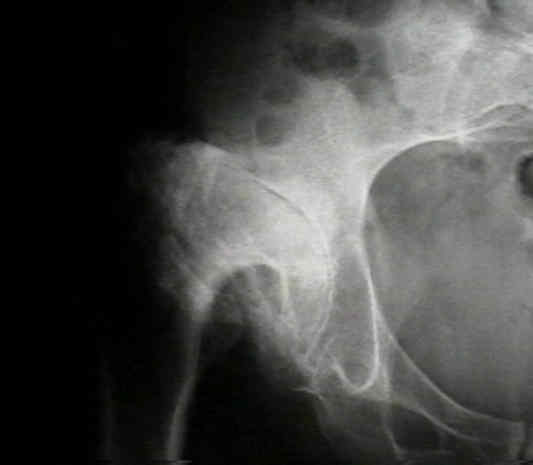
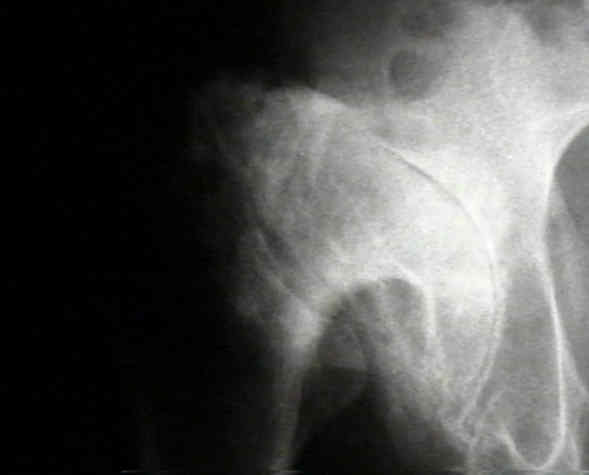
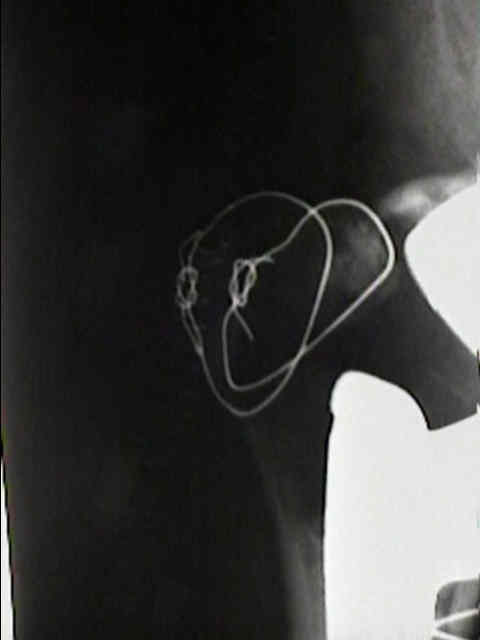
    - case example:


Femoral head autografting with total hip arthroplasty for lateral acetabular dysplasia. A 12-year experience.

Coxarthrosis after congenital dysplasia. Treatment by total hip arthroplasty without acetabular bone-grafting.

Custom-Designed Femoral Prostheses in Total Hip Arthroplasty Done with Cement for Severe Dysplasia of the Hip.

Total hip replacement for coxarthrosis secondary to congenital dysplasia and dislocation of the hip. Long-term results.

Double-chevron subtrochanteric shortening derotational femoral osteotomy combined with total hip arthroplasty for the treatment of complete congenital dislocation of the hip in the adult. Preliminary report and description of a new surgical technique.

G. Hartofilakidis M.D., K. Stamos M.D., T. Karachalios M.D., T.T. Ioannidis M.D., N. Zacharakis M.D.
      JBJS (Am). Vol 78-A No. 5, May 1996

Bateman bipolar hips with autologous bone graft reinforcement for dysplastic acetabula.

Modular noncemented total hip arthroplasty for congenital dislocation of the hip. Case report and design rationale.

Modular noncemented total hip arthroplasty for congenital dislocation of the hip. Case report and design rationale.

Coxarthrosis after congenital dysplasia. Treatment by total hip arthroplasty without acetabular bone-grafting.

Long-Term Results of Total Hip Arthroplasty in Congenital Dislocation and Dysplasia of the Hip.   A Follow-Up Note.

Treatment of osteoarthrosis secondary to congenital dislocation of the hip. Primary cemented surface replacement compared with conventional total hip replacement.

  Autogenous bone grafting from the femoral head for treatment of acetabular deficiency in primary total hip arthroplasty with cement: Long term results.
      JA Rodriquez et al.   JBJS 77-A. 1995. p 1227-1233.

Arthroplasty in high congenital dislocation: 21 hips with minimum 5 years follow up.
      H. Fredin et al.   JBJS 76-B. p 735-739.

Total hip replacement for coxarthrosis secondary to congenital dysplasia and dislocation of the hip. Long Term Results.
      JR MacKenzie et al.   JBJS Vol 78-A. No 1. Jan 1996. p 55.


Original Text by Clifford R. Wheeless, III, MD.