

- See:
- Metacarpal Neck Frx
- Metacarpal Shaft Frx
- Discussion:
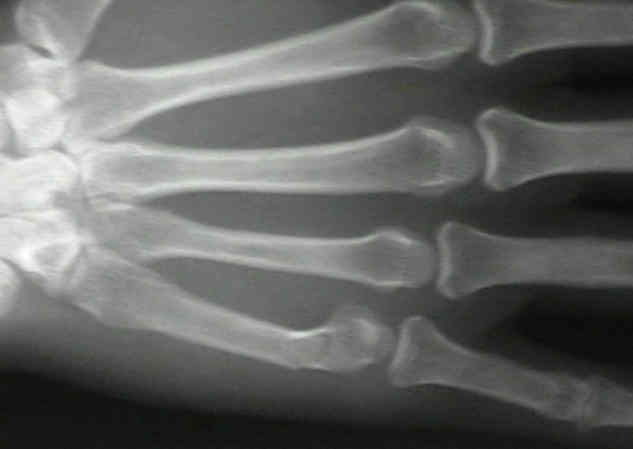
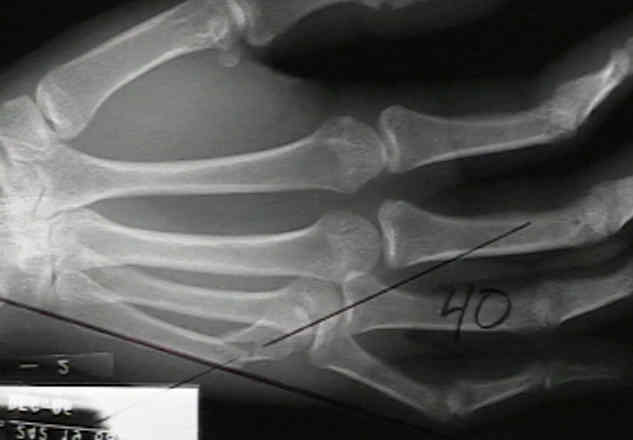
- metacarpal neck frx involving little finger;
- only collateral ligaments, remain attached to the proximal phalanx, & therefore metacarpal head is freed from any proximal stabilizing influence;
- metacarpal head tilts volarly causing joint to lie in hyperextension & collateral ligaments become slack;
- if joint is allowed to remain in hyperextension, collateral ligaments will shorten, leading to limited MCP flexion;
- little finger CMC articulation allows flexion extension arc of 20-30 deg in addition to a rotatory motion facilitating little finger opposition to thumb;
- ring metacarpal provides 10-15 deg of mobility;
- diff dx:
- transverse metacarpl shaft frx this frx may be ammenable to a 4 holed plate;
- frx of metacarpal head;
- infrequent variant of boxer's frx;
- in this injury, impact is recieved directlly on metacarpal head, producing frx thru joint surface;
- requires operative fixation;
- Radiographs:
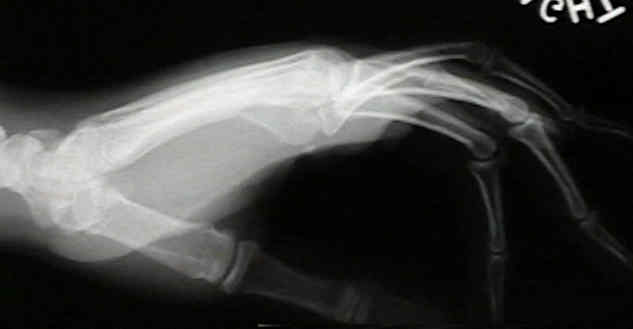
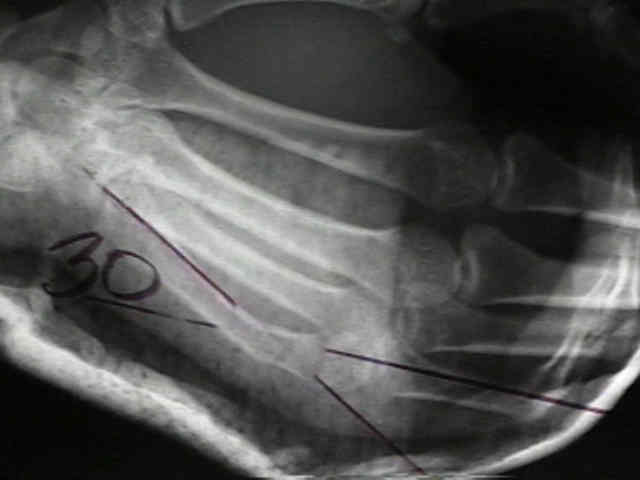
- true lateral radiograph is necessary with these fractures in order to measure the angle of displacement of the distal fragment;
- normal metacarpal neck angle is about 15 deg & therefore a measured angle on film of 30 deg actually = 15 deg;
- when displaced, angulate with dorsal angulation at frx line & distal metacarpal head displaces palmarward;
- Non Operative Treatment:
- clawing results from the palmar displacement of the metacarpal head & resulting imbalance of extrinsic tendons;
- may have cosmetic deformity, but good function;
- methods of reduction:
- because collateral ligaments are the only remaining attachment to metacarpal head, collaterals must be placed in a tightened position to control distal fragment and achieve reduction;
- MP joint is flexed 90 deg to produce tightening of MP collateral ligaments;
- flexed metacarpal is directed dorsally, which effects reduction of metacarpal head by correction of volar angulation;
- accetable reduction:
- on lateral view if angulation > 30-40 deg, a functional deficit (pseudoclawing) may result - consider percutaneous pin fixation.
- in the report by Ali et al (JHS Vol 24-A. July 1999), 30 deg of angulation resulted in loss of 22% of finger ROM;
- on AP view, little or no anglation should be accepted, since this indicates mal-rotation of the digit;
- references:
- Biomechanical effects of angulated boxer's fractures.
- Fractures of the fifth metacarpal neck: is reduction or immobilisation necessary?
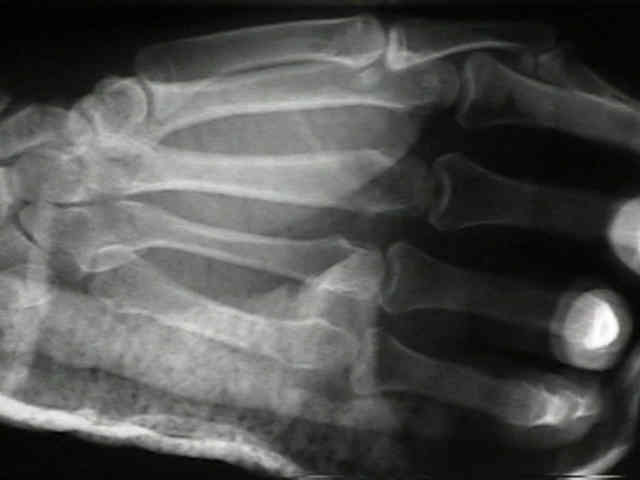
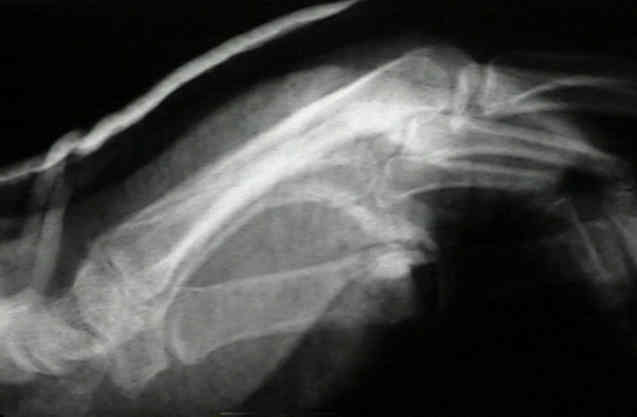
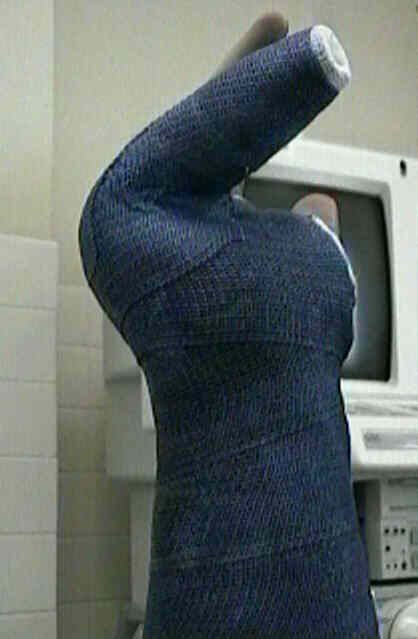
- casting technique:
- no matter what casting technique is used, it is essential to "buddy tape" the little and ring fingers (with an intervening layer of cast padding) in order to control fracture malrotation;
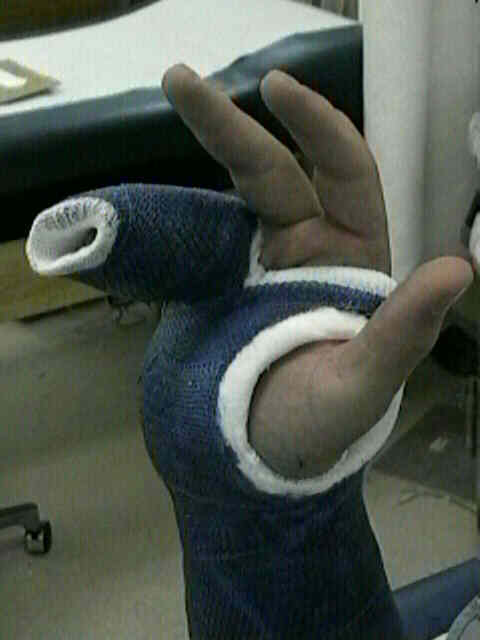
- Operative Treatment:
Year Book: Functional Treatment of Metacarpal Fractures: 100 Randomized Cases With or Without Fixation.
Immediate mobilization of fractures of the neck of the fifth metacarpal.
Fractures of the metacarpal neck of the little finger.
Conservative treatment of boxer's fracture: a retrospective analysis.
Intra-articular fractures at the base of the fifth metacarpal. A clinical and radiographical study of 64 cases.