

- Sequential Order of Release:
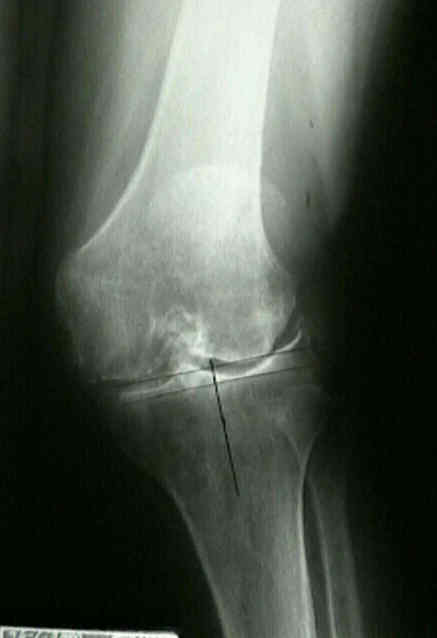
- PCL: (posterior stabilized prosthesis is generally required);
- LCL
- in general, sepquential elevation of the femoral origin of the LCL is performed prior to release of other structures
because LCL elevation will provide the major correction (after release of the PCL);
- if other structures are released beform LCL, there may be overcorrection;
- the main exception to this is when there is resonable extension balance but gross lateral tightness in flexion;
- in this case, release of the popliteus and lateral capsule is performed prior to release of LCL;
- in some cases, the released ligament may need to be reattached with bone anchors;
- ref: Flexion-extension joint gap changes after lateral structure release for valgus deformity correction in TKA: a cadaveric study.
- see varus stress testing;
- lateral retinaculum / posterolateral capsule
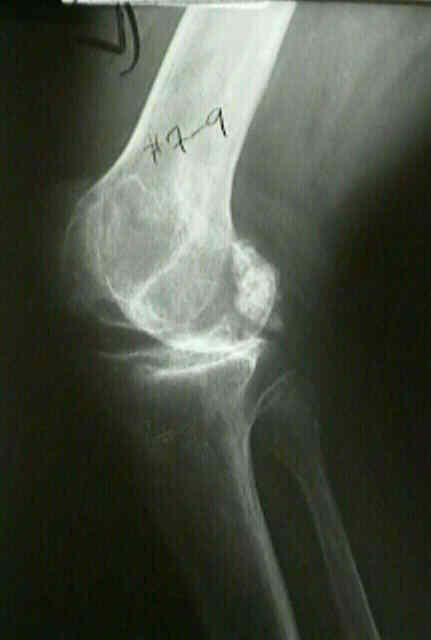
- iliotibial tract
- popliteus
- overly tight popliteal tendon can cause internal rotation of the tibia on the femur with motion;
- externally rotate the tibia on the femur can relax an overly tight popliteus tendon which will lead to an excessive internal rotational
force after surgery;
- in some cases the popliteus tendon will have to be released;
- ref: Popliteus tendon resection during total knee arthroplasty: an observational report
- intramuscular septum
- lateral femoral periosteum
- lateral head of gastrocnemius
- long head biceps femoris tendon
- Krackow technique: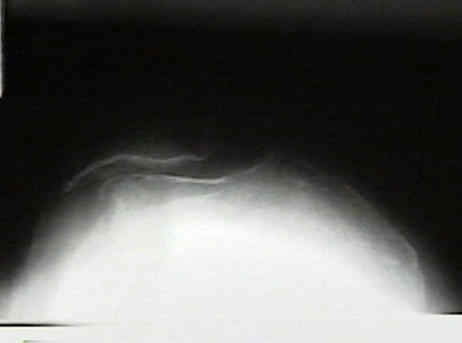
- type I: (mild)
- 90-95%: little or no medial stretching
- note that a flexion contracture is common with this deformity;
- make sure that there is adequate length in proximal quadriceps capsular incision to facilitate sufficient lateral retraction and eversion of the patella;
- only a few milimeters to at most a centimeter, of bone below the actual joint line needs to be cleared of soft tissue;
- order of release:
- PCL: (posterior stabilized prosthesis is generally required);
- posterolateral capsular ligamentous complex
- LCL, popliteus;
- typically a medial ligament reconstruction will not be necessary;
- type II: severe
- PCL: (posterior stabilized prosthesis is generally required);
- valgus contractures are corrected by reflection of capsule proximally off the femur;
- a significant deformity may require reflection of femoral origin of LCL;
- after removal of any peripheral osteophytes from the femur and tibia, lateral capsule is elevated to the posterolateral corner;
- if the knee cannot be brought into neutral alignment, the following tissues may have to be sequentially released;
- this is performed inside joint, & band can be easily palpated thru the synovium and tenotomized using cautery;
- popliteus tendon
- lateral collateral and popliteus tendons should be released at their lateral femoral epicondylar attachments;
- LCL
- biceps femoris tendon:
- this can be done from inside the joint with care taken to protect the peroneal nerve passing posteriorly;
- iliotibial band
- in some cases, excessive medial laxity is addressed with medial reefing along with lateral release, but the surgeon should have a
semi-constrained TKR available should instability persist after the trial components are in place
Effect of selective lateral ligament release on stability in knee arthroplasty.
Original Text by Clifford R. Wheeless, III, MD.
Last updated by Clifford R. Wheeless, III, MD on Sunday, February 3, 2013 8:18 pm